Paper Details

Call For Papers
Volume 07, Issue 10
Frequency: 12 Issue per year
Paper Submission: Throughout the Month
Acceptance Notification: Within 2 days
Areas Covered: Multidisciplinary
Accepted Language: Multiple Languages
Journal Type: Online (e-Journal)
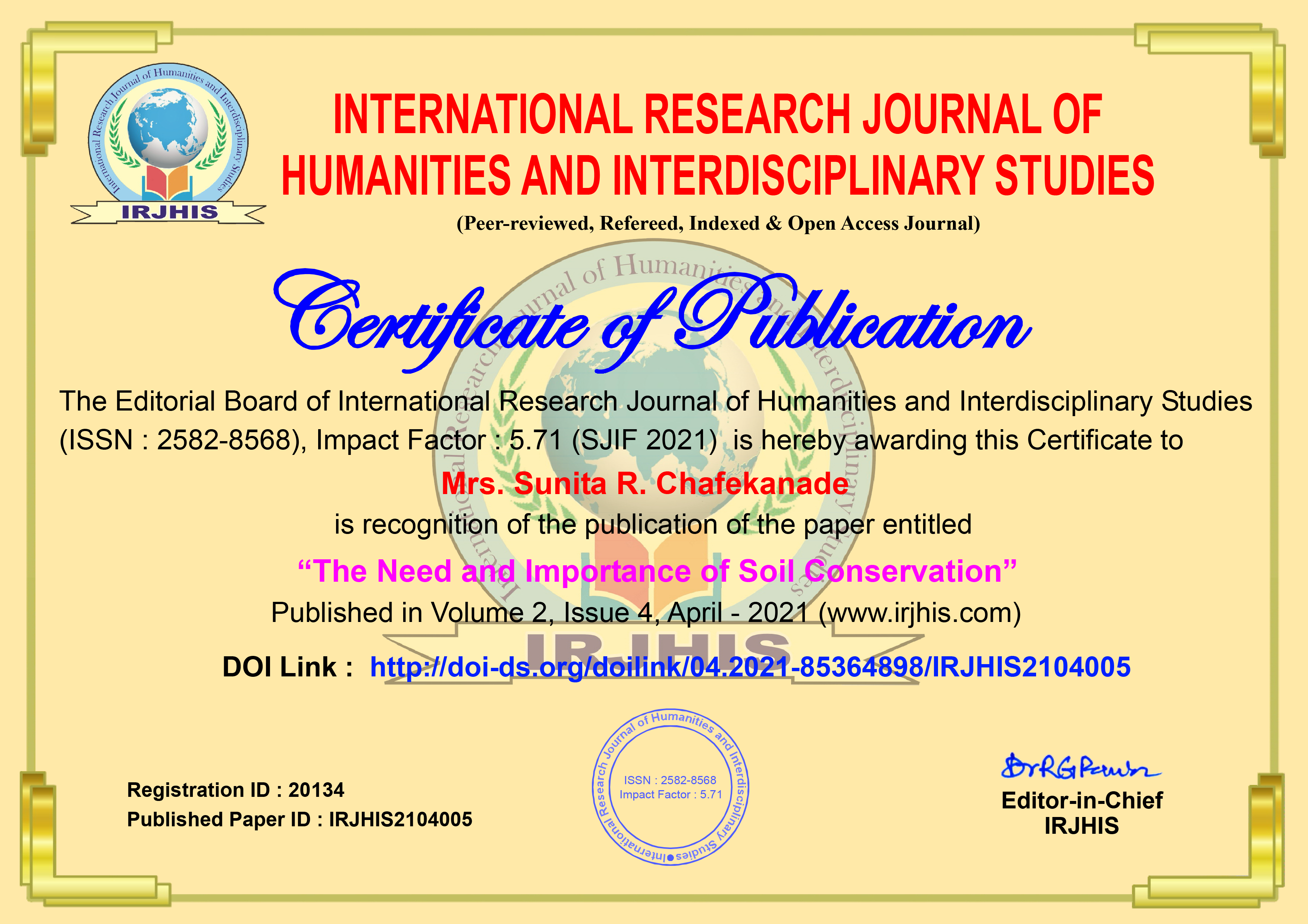
Sample Certificate
Announcement
Publish books with ISBN Number
- Edited Book
- Text Book
- Ph.D Thesis
- Conference Proceedings
ISSN Number:
2582-8568
Journal DOI No:
03.2021-11278686
Title:
Divorce and Muslim Women in India: A PRISMA-Guided Systematic Review
Authors:
Cite this Article:
,
Divorce and Muslim Women in India: A PRISMA-Guided Systematic Review, International Research Journal of Humanities and Interdisciplinary Studies (www.irjhis.com), ISSN : 2582-8568, Volume: 07, Issue: 02, Year: February 2026, Page No : 23-37,
Available at : http://irjhis.com/paper/IRJHIS2602004.pdf
Abstract:
India is often characterised as a low-divorce society, yet women’s experiences of marital breakdown reveal complex negotiations of kinship norms, economic dependence, social stigma, and uneven access to justice. Within this broader terrain, Muslim women’s divorces have attracted sustained scholarly and political attention, particularly through debates on Muslim personal law, maintenance rights, and the regulation or criminalisation of practices such as triple talaq and extra-judicial divorce. Despite a growing body of literature, this scholarship remains fragmented across legal, sociological, and policy-oriented domains. This study undertakes a PRISMA-guided systematic review of peer-reviewed literature on divorce and marital dissolution among Muslim women in India to synthesise existing evidence and identify directions for future research. Using a transparent screening and selection process across Scopus, the review maps how scholars conceptualise women’s marital exit through intersecting legal and social pathways, including formal court litigation, personal-law adjudication, and informal or community-based dispute resolution mechanisms. The thematic synthesis identifies several recurring concerns: the disjunction between legal reform and women’s everyday ability to secure maintenance, dignity, and safety; the constrained choices women face when navigating khula, negotiated settlements, or community mediation; the emergence of women-led Islamic legal activism and female-mediated forums as alternative sites of justice; and the ambivalent role of political and media framings that may simultaneously advance and instrumentalise Muslim women’s rights claims. At the same time, the review highlights notable gaps in the literature, including limited empirical attention to post-divorce trajectories, insufficient comparative analysis across regions and class locations, and a lack of longitudinal evidence on the material and social consequences of criminalisation in the absence of robust welfare protections. By consolidating dispersed scholarship into an integrated analytical map, this review contributes to socio-legal debates on gender, law, and minority rights, while offering a grounded foundation for more context-sensitive, rights-centred approaches to marital dissolution among Muslim women in India.
Keywords:
Muslim women, divorce, personal law, India, PRISMA, systematic review
Publication Details:
Published Paper ID: IRJHIS2602004
Registration ID: 22245
Published In: Volume: 07, Issue: 02, Year: February 2026
Page No: 23-37
ISSN Number: 2582-8568
Download Full Paper: Click Here
Article Preview: