Paper Details

Call For Papers
Volume 07, Issue 10
Frequency: 12 Issue per year
Paper Submission: Throughout the Month
Acceptance Notification: Within 2 days
Areas Covered: Multidisciplinary
Accepted Language: Multiple Languages
Journal Type: Online (e-Journal)
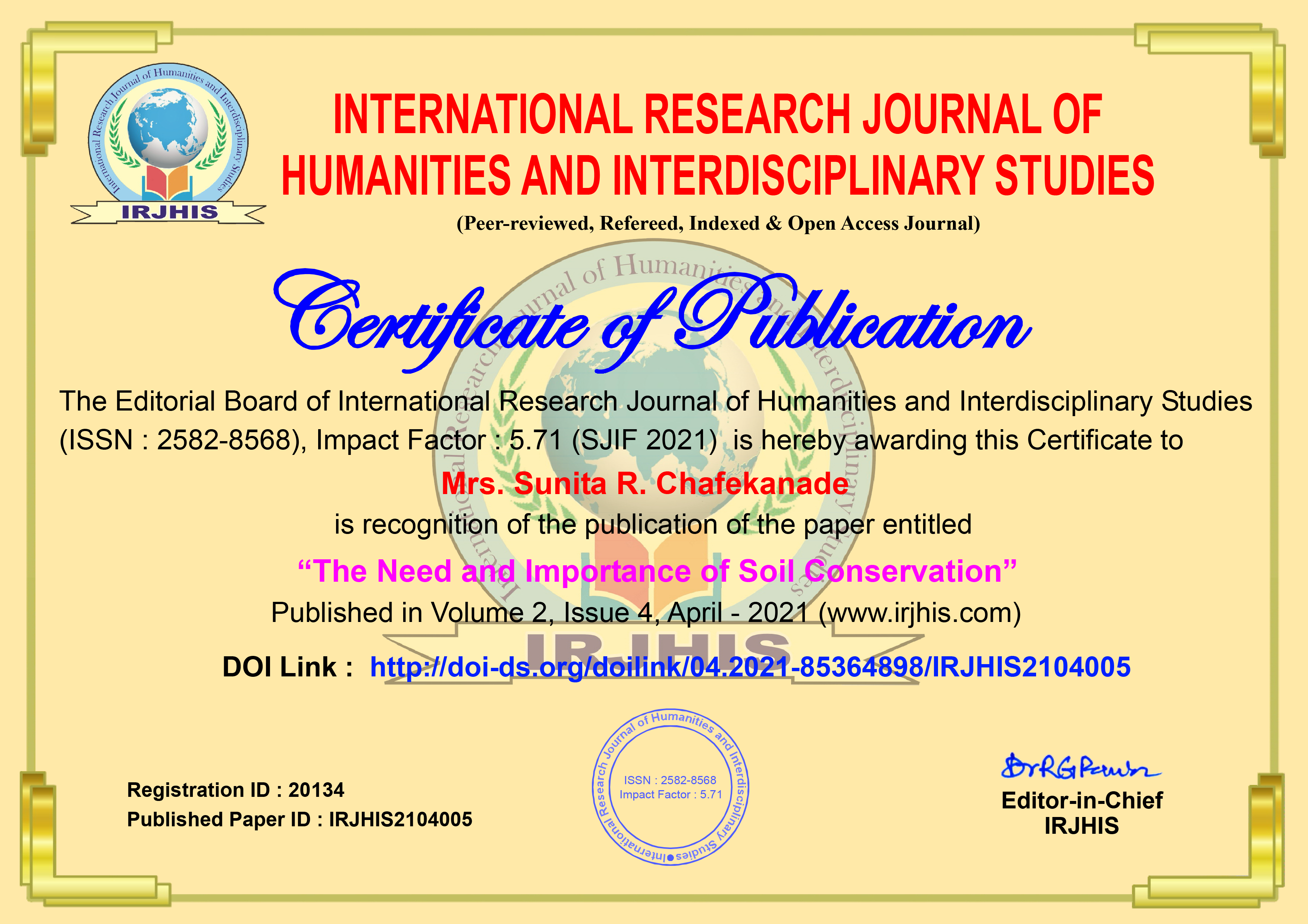
Sample Certificate
Announcement

Publish books with ISBN Number
- Edited Book
- Text Book
- Ph.D Thesis
- Conference Proceedings
ISSN Number:
2582-8568
Journal DOI No:
03.2021-11278686
Title:
Principle of Tolerance: A Study of Akbar's Religious Policy
Authors:
Cite this Article:
,
Principle of Tolerance: A Study of Akbar's Religious Policy, International Research Journal of Humanities and Interdisciplinary Studies (www.irjhis.com), ISSN : 2582-8568, Volume: 07, Issue: 02, Year: February 2026, Page No : 69-80,
Available at : http://irjhis.com/paper/IRJHIS2602008.pdf
Abstract:
The reign of Akbar represents a significant moment in the intellectual and political history of medieval India, particularly in relation to the idea of religious tolerance. Ruling over a vast empire marked by extraordinary religious, cultural, and social diversity, Akbar confronted the complex challenge of maintaining unity without enforcing religious uniformity. This study explores Akbar’s religious vision as a carefully developed framework that sought to reconcile faith, reason, and governance. Moving beyond narrow sectarian loyalties, Akbar articulated a principle of tolerance grounded in ethical universalism, rational inquiry, and respect for individual conscience. His engagement with scholars of various religious traditions, his skepticism toward rigid orthodoxy, and his emphasis on justice as the foundation of sovereignty all contributed to a distinctive outlook that prioritized harmony over dogma. This paper examines how Akbar’s religious vision evolved over time and how it translated into broader principles such as universal peace (Sulh-i-Kul), freedom of belief, and administrative impartiality. By situating Akbar’s approach within the political realities of Mughal rule and the intellectual currents of the sixteenth century, the study argues that his commitment to tolerance was neither accidental nor merely pragmatic. Instead, it was a conscious and innovative response to the moral and political demands of ruling a plural society. The study ultimately highlights the historical significance of Akbar’s religious vision as an early and influential model of pluralism in South Asian history.
Keywords:
Sul - I - Kul, Religious Tolerance, Interfaith Harmony, Ibadat – Khana, Din – I – Ilahi
Publication Details:
Published Paper ID: IRJHIS2602008
Registration ID: 22253
Published In: Volume: 07, Issue: 02, Year: February 2026
Page No: 69-80
ISSN Number: 2582-8568
Download Full Paper: Click Here
Article Preview: