Paper Details

Call For Papers
Volume 07, Issue 10
Frequency: 12 Issue per year
Paper Submission: Throughout the Month
Acceptance Notification: Within 2 days
Areas Covered: Multidisciplinary
Accepted Language: Multiple Languages
Journal Type: Online (e-Journal)
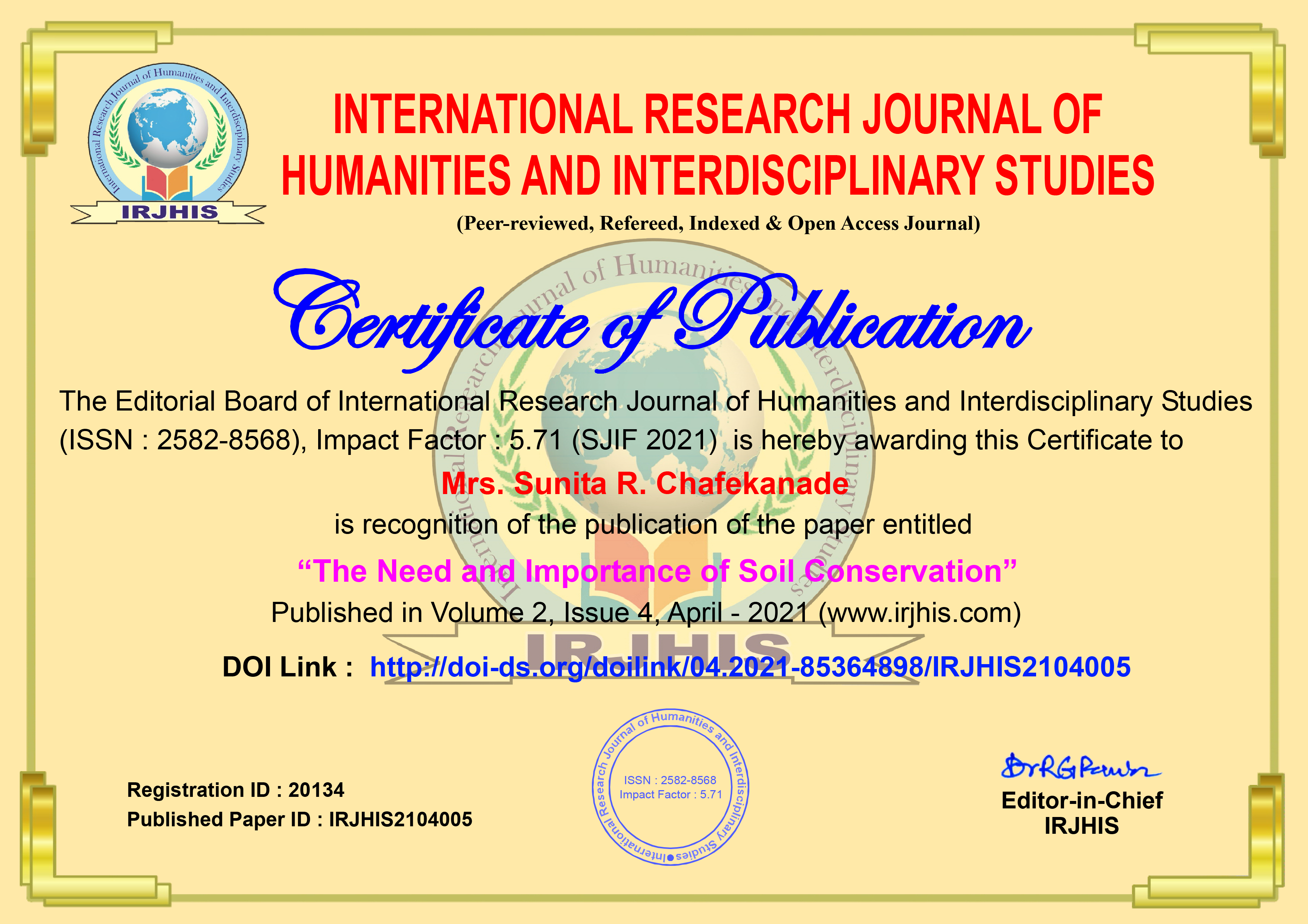
Sample Certificate
Announcement

Publish books with ISBN Number
- Edited Book
- Text Book
- Ph.D Thesis
- Conference Proceedings
ISSN Number:
2582-8568
Journal DOI No:
03.2021-11278686
Title:
From Quotas to Quality Leadership: Assessing the Impact of Women’s Reservation in Local Governance
Authors:
Cite this Article:
,
From Quotas to Quality Leadership: Assessing the Impact of Women’s Reservation in Local Governance, International Research Journal of Humanities and Interdisciplinary Studies (www.irjhis.com), ISSN : 2582-8568, Volume: 07, Issue: 02, Year: February 2026, Page No : 104-115,
Available at : http://irjhis.com/paper/IRJHIS2602012.pdf
Abstract:
Women's reservation in local governance represents one of the most significant institutional interventions aimed at correcting historical gender imbalances in political participation. Mandated through constitutional and statutory provisions, particularly within Panchayati Raj Institutions in India, reservation policies have ensured a minimum presence of women in elected bodies. However, the transition from numerical inclusion to substantive and quality leadership remains a critical area of scholarly inquiry. This article examines whether women's reservation has moved beyond symbolic representation to foster effective, autonomous, and transformative leadership at the grassroots level. Policy reports, existing empirical studies, the article analyses the impact of reservation on women's political empowerment across three dimensions: participation, decision-making authority, and leadership outcomes. It explores how reservation has enhanced women's visibility in local governance, increased their engagement with development issues such as health, education, water, and social welfare, and challenged entrenched patriarchal norms. At the same time, the study critically evaluates persistent challenges, including proxy representation, limited administrative experience, socio-cultural constraints, and inadequate institutional support, which often restrict women's effective exercise of power. The article argues that while quotas have been instrumental in opening political spaces for women, the quality of leadership depends on complementary measures such as capacity-building programmes, political training, legal awareness, and supportive governance ecosystems. Emphasis is placed on the role of leadership training, peer networks, and policy literacy in enabling elected women representatives to move from passive participation to proactive governance. By assessing both achievements and limitations, the article contributes to ongoing debates on gender, governance, and democratic deepening. It concludes that women's reservation is a necessary but not sufficient condition for quality leadership, and sustained institutional and societal interventions are essential to translate numerical representation into meaningful empowerment and inclusive local governance.
Keywords:
Women, Reservation, Local Governance, Panchayati Raj Institutions, Leadership.
Publication Details:
Published Paper ID: IRJHIS2602012
Registration ID: 22255
Published In: Volume: 07, Issue: 02, Year: February 2026
Page No: 104-115
ISSN Number: 2582-8568
Download Full Paper: Click Here
Article Preview: