Paper Details

Call For Papers
Volume 07, Issue 10
Frequency: 12 Issue per year
Paper Submission: Throughout the Month
Acceptance Notification: Within 2 days
Areas Covered: Multidisciplinary
Accepted Language: Multiple Languages
Journal Type: Online (e-Journal)
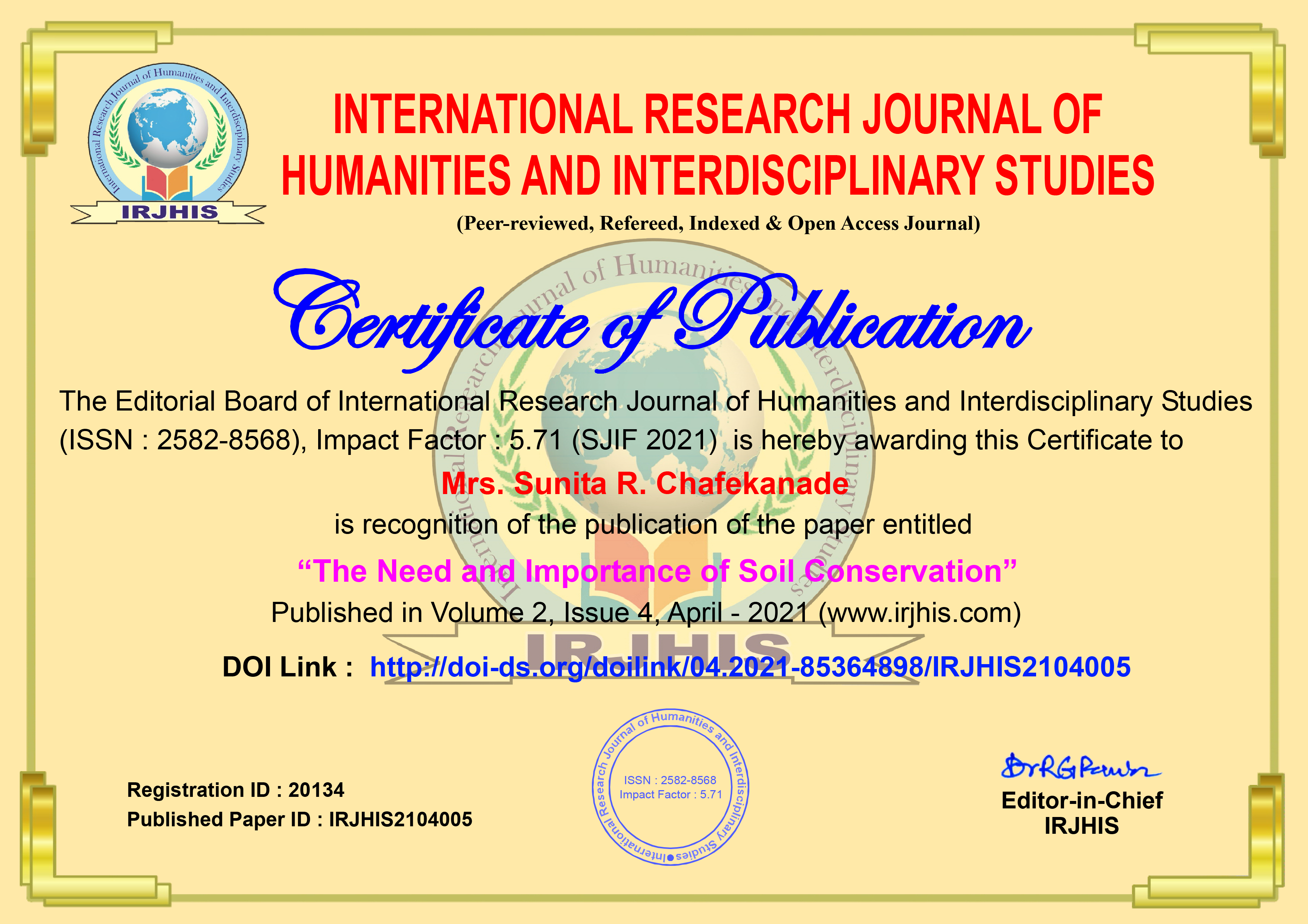
Sample Certificate
Announcement

Publish books with ISBN Number
- Edited Book
- Text Book
- Ph.D Thesis
- Conference Proceedings
ISSN Number:
2582-8568
Journal DOI No:
03.2021-11278686
Title:
Traditional Medicinal Plant Practices among Rural Women of Bikaner District, Rajasthan
Authors:
Cite this Article:
,
Traditional Medicinal Plant Practices among Rural Women of Bikaner District, Rajasthan, International Research Journal of Humanities and Interdisciplinary Studies (www.irjhis.com), ISSN : 2582-8568, Volume: 07, Issue: 03, Year: March 2026, Page No : 380-397,
Available at : http://irjhis.com/paper/IRJHIS2603042.pdf
Abstract:
Traditional medicinal plant knowledge forms an integral part of primary healthcare systems in rural India, particularly in arid regions where access to modern medical facilities is limited. This research was done to record the local medicinal knowledge of the rural women in the Bikaner district of Rajasthan. The research design used was descriptive research design and multistage random sampling technique to select 120 respondents in four villages in two panchayat samities. The data were gathered using structured and pre-tested interview schedule which included the socio-demographic features, and specific details concerning the preparation and the use of medicinal plants. The results revealed that the respondents extensively used plant based remedies to address common diseases like fever, cough, digestive problems, skin diseases, nausea, joint pains and dehydration. Some of the most common traditions were ginger tea, turmeric milk, lemonade, holy basil kadha, preparation of isabgol, fennel mixtures and khus-khus formulations. Unpopular were remedies based on raw ginger, clove preparations, ashwagandha mixtures and some amla preparations. This reliance on the native ways was explained by the availability, low costs, and cultural appropriateness of the native medicinal plants, especially in the areas with underdeveloped healthcare facilities. The paper shows the importance of rural women as preservers of traditional health knowledge and the significance of systematically preserving it to help communities health, conserve cultural and biodiversity.
Keywords:
Arid medicinal plants, Community health, Ethnobotany, Home remedies, Indigenous knowledge, Medicinal plants, Rural women, Rajasthan, Traditional practices
Publication Details:
Published Paper ID: IRJHIS2603042
Registration ID: 22303
Published In: Volume: 07, Issue: 03, Year: March 2026
Page No: 380-397
ISSN Number: 2582-8568
Download Full Paper: Click Here
Article Preview: