Paper Details

Call For Papers
Volume 07, Issue 10
Frequency: 12 Issue per year
Paper Submission: Throughout the Month
Acceptance Notification: Within 2 days
Areas Covered: Multidisciplinary
Accepted Language: Multiple Languages
Journal Type: Online (e-Journal)
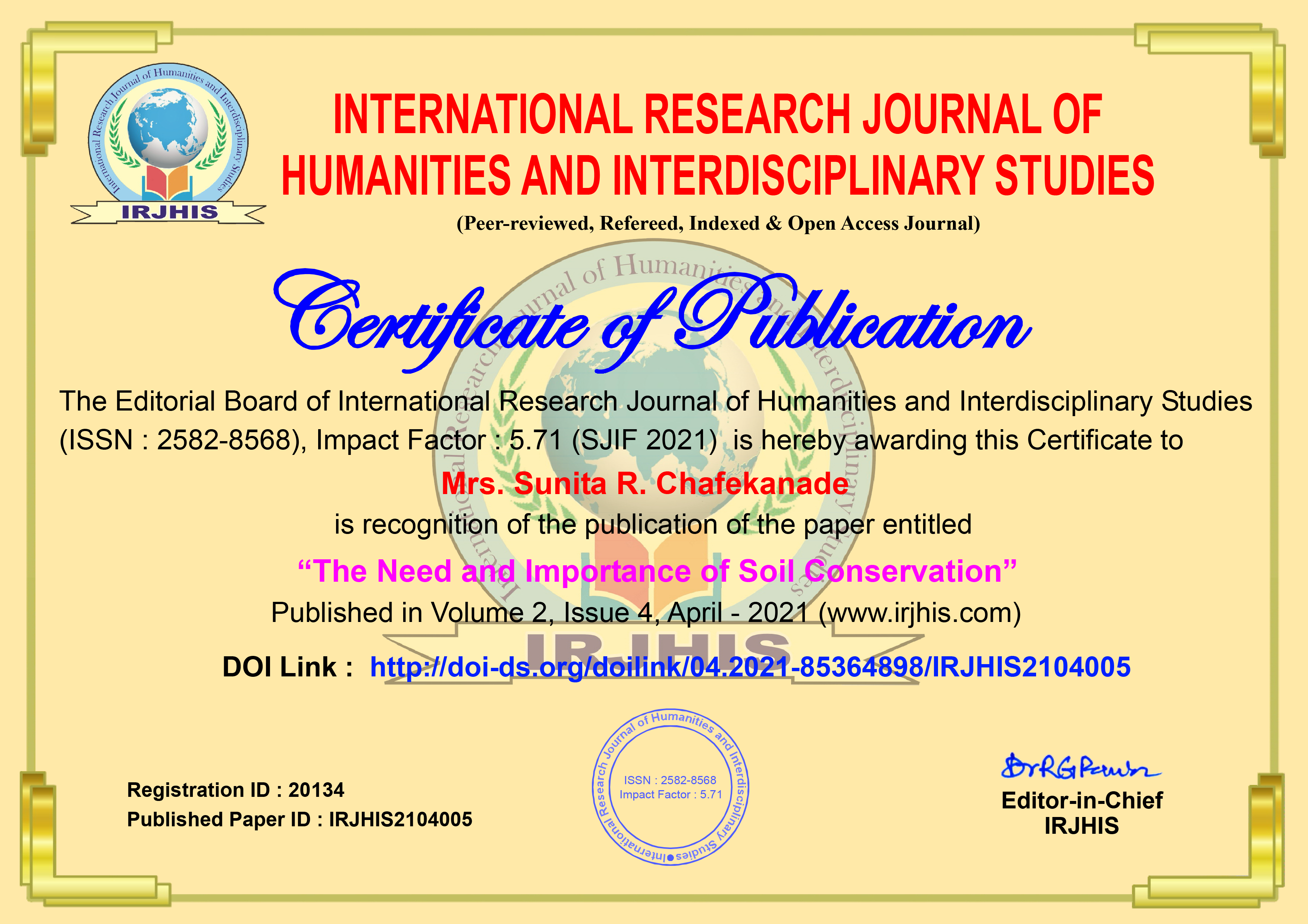
Sample Certificate
Announcement
Publish books with ISBN Number
- Edited Book
- Text Book
- Ph.D Thesis
- Conference Proceedings
ISSN Number:
2582-8568
Journal DOI No:
03.2021-11278686
Title:
Effectiveness of Micro-Teaching in Teacher Training
Authors:
Cite this Article:
,
Effectiveness of Micro-Teaching in Teacher Training, International Research Journal of Humanities and Interdisciplinary Studies (www.irjhis.com), ISSN : 2582-8568, Volume: 07, Issue: 04, Year: April 2026, Page No : 80-85,
Available at : http://irjhis.com/paper/IRJHIS2604007.pdf
Abstract:
This study examines the effectiveness of micro-teaching as a pedagogical tool in teacher education programs, particularly for pre-service teachers. Micro-teaching is a structured and scaled-down teaching practice that allows trainees to develop specific teaching skills in a controlled environment. By reducing class size, lesson duration, and focusing on one skill at a time, it enables trainees to improve key aspects such as questioning, explanation, and classroom interaction. The research adopts a mixed-methods approach, combining quantitative and qualitative techniques. Data was collected through observation scales, performance assessments, feedback sessions, and reflective practices. The study involved pre-service teachers divided into control and experimental groups to compare traditional teaching methods with micro-teaching. The findings reveal that micro-teaching significantly enhances instructional competence among trainees. Participants who underwent micro-teaching showed improvement in lesson planning, clarity, use of teaching aids, and student engagement. It also helped in building confidence by providing a safe environment where trainees could practice without fear of failure. The Teach–Feedback–Reteach cycle played a key role in continuous improvement. Furthermore, micro-teaching contributed to the development of classroom management skills and encouraged reflective teaching practices. Trainees became more aware of their strengths and weaknesses and were able to improve through constructive feedback. In contrast, those trained through traditional methods showed slower progress. In conclusion, micro-teaching is an effective method for bridging the gap between theory and practice. It enhances pedagogical skills and prepares pre-service teachers to handle real classroom situations with confidence and competence.
Keywords:
Micro-teaching, Teacher Education, Pedagogical Skills, Pre-service Teachers, Skill Acquisition, Instructional Design.
Publication Details:
Published Paper ID: IRJHIS2604007
Registration ID: 22332
Published In: Volume: 07, Issue: 04, Year: April 2026
Page No: 80-85
ISSN Number: 2582-8568
Download Full Paper: Click Here
Article Preview: