Paper Details

Call For Papers
Volume 07, Issue 10
Frequency: 12 Issue per year
Paper Submission: Throughout the Month
Acceptance Notification: Within 2 days
Areas Covered: Multidisciplinary
Accepted Language: Multiple Languages
Journal Type: Online (e-Journal)

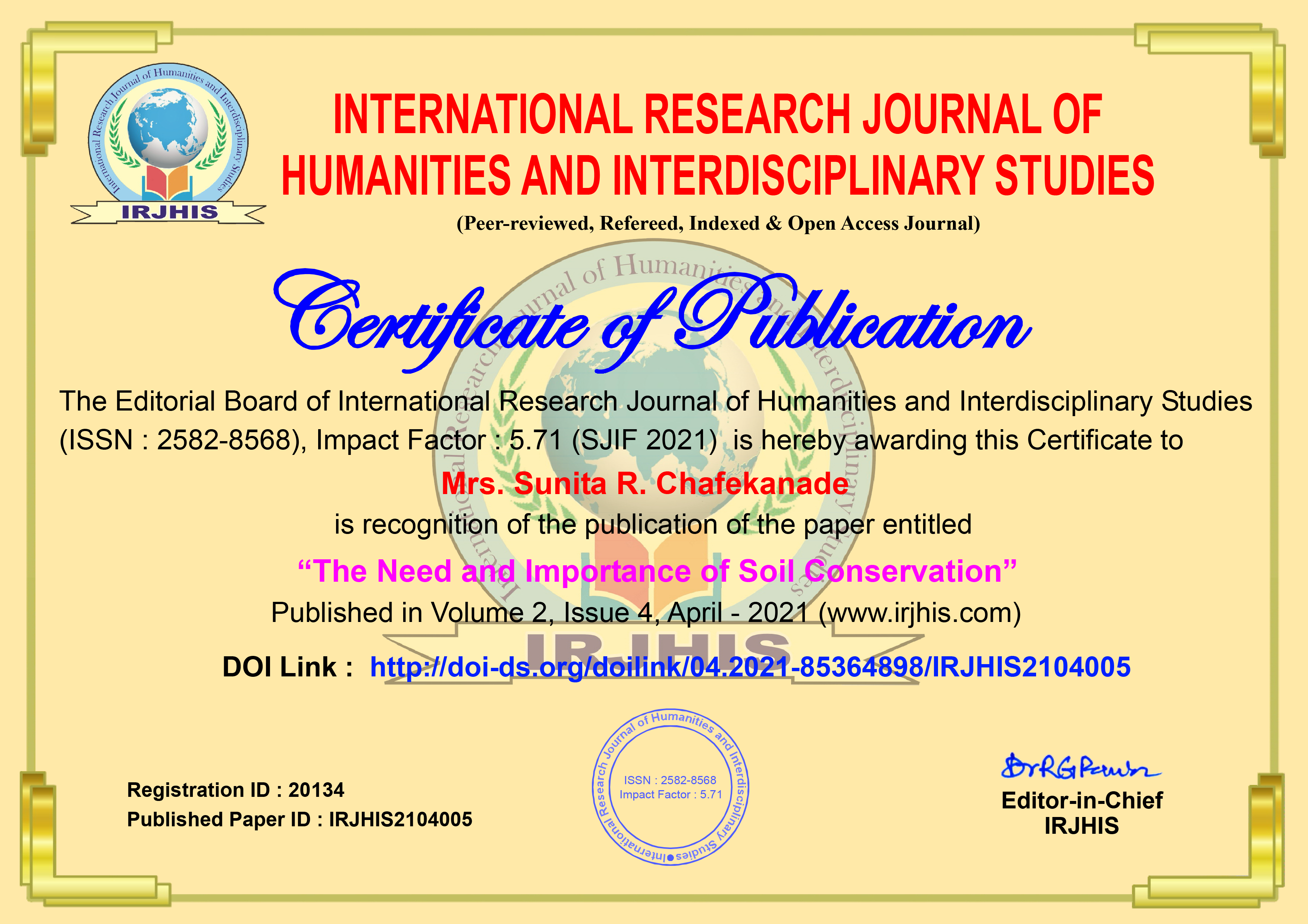
Sample Certificate
Announcement
Publish books with ISBN Number
- Edited Book
- Text Book
- Ph.D Thesis
- Conference Proceedings
ISSN Number:
2582-8568
Journal DOI No:
03.2021-11278686
Title:
Physicians in Ancient India and the Shaping of Public Health
Authors:
Cite this Article:
,
Physicians in Ancient India and the Shaping of Public Health, International Research Journal of Humanities and Interdisciplinary Studies (www.irjhis.com), ISSN : 2582-8568, Volume: 07, Issue: 04, Year: April 2026, Page No : 146-151,
Available at : http://irjhis.com/paper/IRJHIS2604014.pdf
Abstract:
This paper explores the pivotal role of physicians in shaping public health in ancient India. It examines the evolution of medical practitioners, highlighting key terms like Vaidya and Bhishaj, who transitioned from early healers to highly trained professionals. Classical texts, such as the Charak and Sushruta Samhitas, emphasized that genuine physicians required rigorous theoretical knowledge, clinical experience, and explicit state authorization. To safeguard public health from dangerous quacks, the state strictly regulated medical practice, enforcing severe punishments for unlicensed healers.Furthermore, ancient physicians functioned as vital educators and epidemic managers, establishing healthcare as a profound social responsibility.
Keywords:
Public Health, Ancient India, Physicians, Vaidya, Ayurveda, Quacks, State Regulation
Publication Details:
Published Paper ID: IRJHIS2604014
Registration ID: 22342
Published In: Volume: 07, Issue: 04, Year: April 2026
Page No: 146-151
ISSN Number: 2582-8568
Download Full Paper: Click Here
Article Preview: