Paper Details

Call For Papers
Volume 07, Issue 10
Frequency: 12 Issue per year
Paper Submission: Throughout the Month
Acceptance Notification: Within 2 days
Areas Covered: Multidisciplinary
Accepted Language: Multiple Languages
Journal Type: Online (e-Journal)
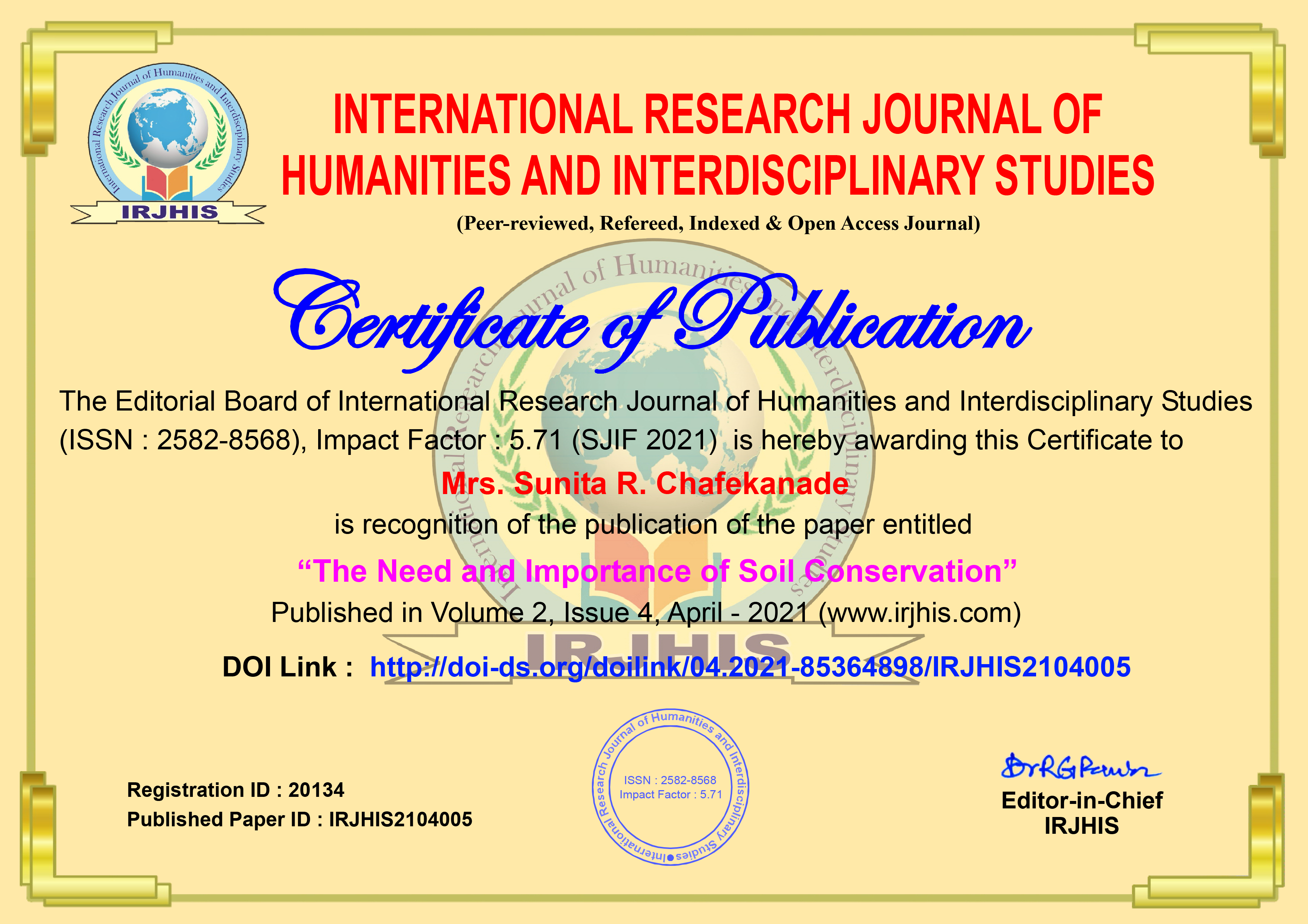
Sample Certificate
Announcement
Publish books with ISBN Number
- Edited Book
- Text Book
- Ph.D Thesis
- Conference Proceedings

ISSN Number:
2582-8568
Journal DOI No:
03.2021-11278686
Title:
One Nation One Election Scheme and its implications on Haryana’s Panchayati Raj Institutions
Authors:
Cite this Article:
,
One Nation One Election Scheme and its implications on Haryana’s Panchayati Raj Institutions , International Research Journal of Humanities and Interdisciplinary Studies (www.irjhis.com), ISSN : 2582-8568, Volume: 07, Issue: 05, Year: May 2026, Page No : 01-07,
Available at : http://irjhis.com/paper/IRJHIS2605001.pdf
Abstract:
India's One Nation, One Election (ONOE) proposal has generated intense debate about its consequences for federalism and local democracy. This study explores how ONOE may affect Haryana’s Panchayati Raj Institutions (PRIs), particularly regional decentralisation, caste-based politics and local governance systems. The research draws on constitutional guidelines set out by the 73rd Amendment, empirical evidence from panchayat elections in Haryana, and field studies, to explore how the synchronization of elections may affect decentralized policymaking and the institutional autonomy of gram panchayats, panchayat samitis, and zila parishads. The paper also examines the bureaucratic challenges presented by electoral synchronization, including budgetary misalignment and timeliness of developmental fund allocation. A key aspect of this research examines how ONOE may reshape the dynamics in the mobilisation of caste-based political movements, historically important to local elections in Haryana, particularly among Jat, Dalit and OBC voters. Finally, the paper highlights governance challenges and suggests reforms to balance electoral efficiency and the democratic health of Panchayati Raj in Haryana.
Keywords:
One Nation One Election, Panchayati Raj, Haryana Local Government, Decentralised Governance, Regional Autonomy, Caste Politics, Electoral Synchronisation, Administrative efficiency, Fiscal Federalism, 73rd Constitutional Amendment, Gram Panchayat, Democratic Decentralisation, Electoral Reforms in India, OBC Mobilisation, Simultaneous Elections
Publication Details:
Published Paper ID: IRJHIS2605001
Registration ID: 22372
Published In: Volume: 07, Issue: 05, Year: May 2026
Page No: 01-07
ISSN Number: 2582-8568
Download Full Paper: Click Here
Article Preview: