Paper Details

Call For Papers
Volume 07, Issue 10
Frequency: 12 Issue per year
Paper Submission: Throughout the Month
Acceptance Notification: Within 2 days
Areas Covered: Multidisciplinary
Accepted Language: Multiple Languages
Journal Type: Online (e-Journal)
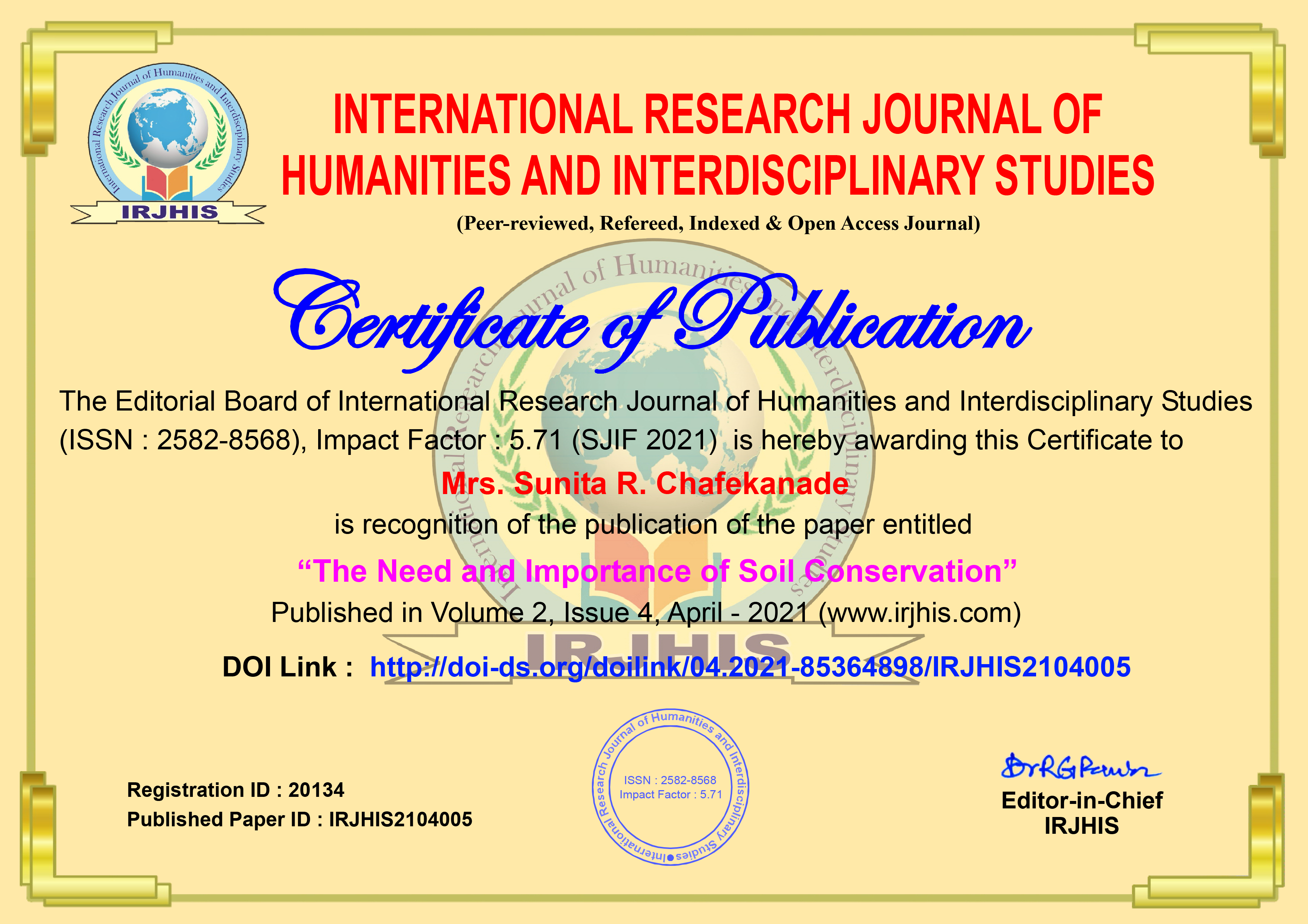
Sample Certificate
Announcement

Publish books with ISBN Number
- Edited Book
- Text Book
- Ph.D Thesis
- Conference Proceedings
ISSN Number:
2582-8568
Journal DOI No:
03.2021-11278686
Title:
Negotiating Ambition and Identity: Women's Resilience in Caryl Churchill's Top Girls
Authors:
Cite this Article:
,
Negotiating Ambition and Identity: Women's Resilience in Caryl Churchill's Top Girls, International Research Journal of Humanities and Interdisciplinary Studies (www.irjhis.com), ISSN : 2582-8568, Volume: 07, Issue: 07, Year: July 2026, Page No : 116-124,
Available at : http://irjhis.com/paper/IRJHIS2607012.pdf
Abstract:
One of the most significant feminist plays in modern British theatre is Caryl Churchill's Top Girls (1982), which is a critical examination of the ambition, identity and strength of women in patriarchal, capitalist societies. The play is set against the socio-political background of Thatcherite Britain and asks what freedom working through the individual can achieve for women, and what it can achieve for them but doesn't. This paper examines how Churchill depicts women's resilience in the different lives of Marlene, Joyce, Angie and the historical women gathered in the iconic opening dinner scene. By focusing on the multi-faceted character of resilience, rather than just a story of success, Churchill conveys the nature of the situation as a class-based division, a gender-related expectation, an emotional loss, and a conflict of ideology. The study can be applied to Top Girls with feminist notions of Simone de Beauvoir, Judith Butler, bell hooks and Elaine Aston. Resilience is cultivated via constant discussions of identity, agency and social inclusion. The paper also reveals how Churchill challenges neoliberal ideals of empowerment for women by revealing the underlying emotional and ethical costs of ambition for women. The examination of the text and feminist thought identifies resilience as a negotiation between individual aspiration and collective responsibility and as something other than personal endurance in Top Girls. Consequently, Churchill's play continues to offer valuable insights into contemporary debates surrounding feminism, leadership, class inequality, and women's empowerment.
Keywords:
Caryl Churchill, Top Girls, Women's Resilience, Feminism, Identity, Socialist Feminism, Patriarchy
Publication Details:
Published Paper ID: IRJHIS2607012
Registration ID: 22460
Published In: Volume: 07, Issue: 07, Year: July 2026
Page No: 116-124
ISSN Number: 2582-8568
Download Full Paper: Click Here
Article Preview: