Paper Details

Call For Papers
Volume 07, Issue 10
Frequency: 12 Issue per year
Paper Submission: Throughout the Month
Acceptance Notification: Within 2 days
Areas Covered: Multidisciplinary
Accepted Language: Multiple Languages
Journal Type: Online (e-Journal)
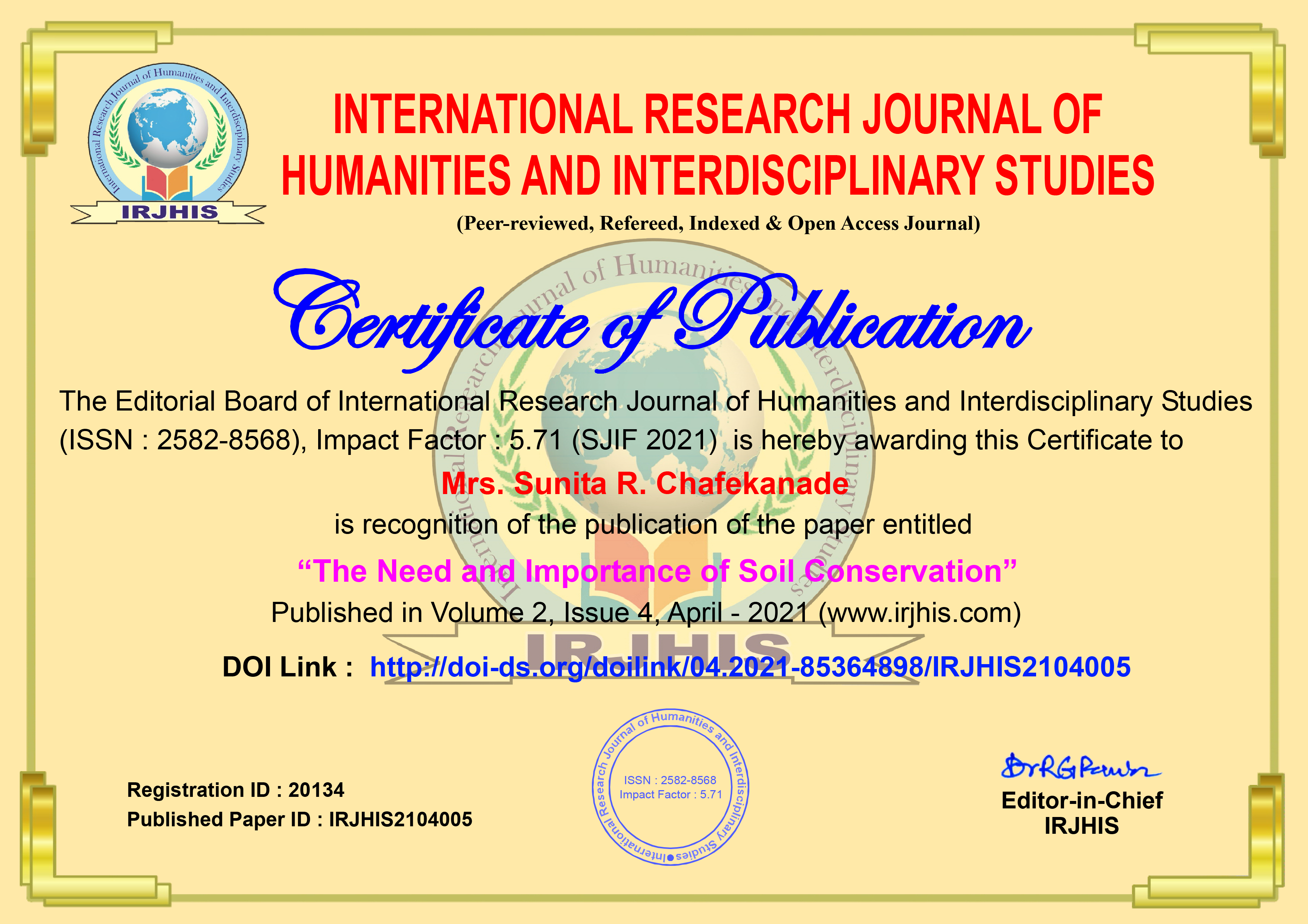
Sample Certificate
Announcement

Publish books with ISBN Number
- Edited Book
- Text Book
- Ph.D Thesis
- Conference Proceedings
ISSN Number:
2582-8568
Journal DOI No:
03.2021-11278686
Title:
Culinary Tourism as a Tool for Sustainable Development and Climate Resilience A Case Study of Western Himachal Pradesh
Authors:
Cite this Article:
,
Culinary Tourism as a Tool for Sustainable Development and Climate Resilience A Case Study of Western Himachal Pradesh, International Research Journal of Humanities and Interdisciplinary Studies (www.irjhis.com), ISSN : 2582-8568, Volume: 07, Issue: 07, Year: July 2026, Page No : 170-182,
Available at : http://irjhis.com/paper/IRJHIS2607019.pdf
Abstract:
Gastronomic tourism has emerged as a key method to foster sustainable growth, particularly in ecologically fragile regions. This research examines how food-based tourism contributes to enhancing sustainability and climate resilience in the western districts of Himachal Pradesh, such as Kangra and Chamba. The area's classic foods, such as Dham, Madra, Siddu, and dishes made with millet, reflect deep ties to local agriculture and seasonal produce The research takes a broad view by combining ideas from tourism studies, environmental sustainability, and culinary tourism. Culinary tourism has become an important way to promote sustainable development, especially in environmentally sensitive areas. This study looks at how food-based tourism can improve sustainability and climate resilience in the western districts of Himachal Pradesh, including Kangra and Chamba. The region’s traditional dishes, such as Dham, Madra, Siddu, and millet-based recipes, show strong connections to local farming and seasonal ingredients. The research uses a broad view by combining ideas from tourism studies, environmental sustainability, and rural development. It shows how practices like farm-to-table dining, terrace farming, and growing native crops such as millets, rajma, and red rice help maintain ecological balance and support local livelihoods. These crops thrive in mountainous areas and are resilient to climate change, including irregular rainfall and temperature shifts. Using a descriptive and exploratory method with secondary data, the study assesses the impact of culinary tourism on how attractive a destination is, the tourist experience, and community empowerment. It also highlights how local sourcing can reduce food miles, cut down on waste, and support circular economy practices. The findings suggest that culinary tourism can be a model for sustainable development by bringing together cultural preservation, environmental care, and economic growth in mountain regions. rural development. It reveals how practices like farm-to-table dining, terrace farming, and growing local crops such as millets, rajma, and red rice help maintain ecological balance and support local livelihoods. These crops thrive in mountainous areas and can withstand climate changes, such as unpredictable rainfall and temperature shifts. Using a descriptive and exploratory method with secondary data, the study assesses the effect of culinary tourism on the attractiveness of destinations, visitor experiences, and community empowerment. It also highlights how sourcing food locally can cut down on transportation distances, reduce waste, and support circular economy practices. The findings suggest that culinary tourism can be a sustainable development model by blending cultural preservation, environmental care, and economic growth in mountain areas.
Keywords:
culinary tourism, sustainable development, climate resilience, Western Himachal Pradesh, responsible tourism
Publication Details:
Published Paper ID: IRJHIS2607019
Registration ID: 22452
Published In: Volume: 07, Issue: 07, Year: July 2026
Page No: 170-182
ISSN Number: 2582-8568
Download Full Paper: Click Here
Article Preview: