Paper Details

Call For Papers
Volume 07, Issue 11
Frequency: 12 Issue per year
Paper Submission: Throughout the Month
Acceptance Notification: Within 2 days
Areas Covered: Multidisciplinary
Accepted Language: Multiple Languages
Journal Type: Online (e-Journal)
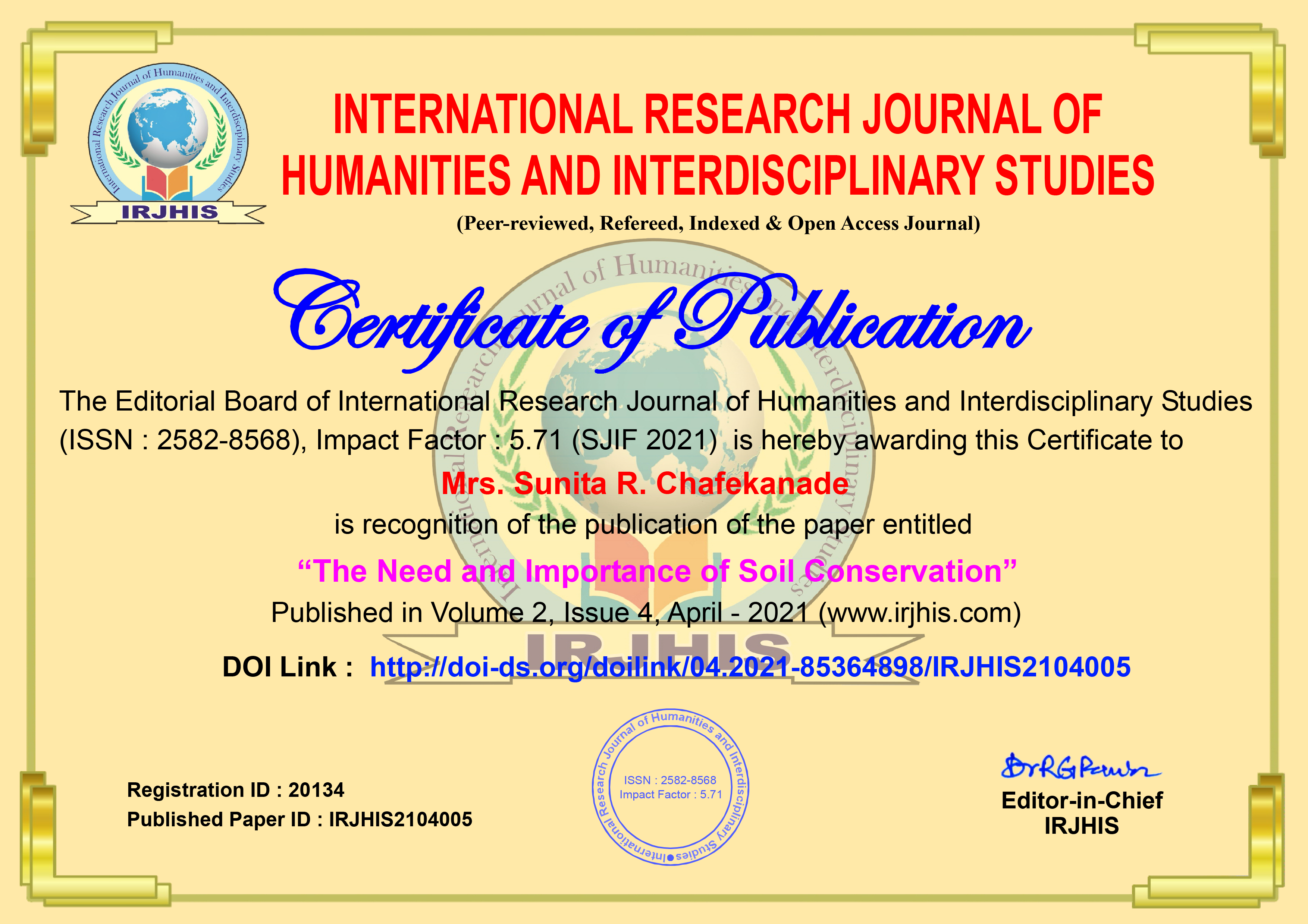
Sample Certificate
Announcement
Publish books with ISBN Number
- Edited Book
- Text Book
- Ph.D Thesis
- Conference Proceedings
ISSN Number:
2582-8568
Journal DOI No:
03.2021-11278686
Title:
The Biology of Human Immunity: From Innate Defense to Adaptive Immune Responses
Authors:
Cite this Article:
,
The Biology of Human Immunity: From Innate Defense to Adaptive Immune Responses, International Research Journal of Humanities and Interdisciplinary Studies (www.irjhis.com), ISSN : 2582-8568, Volume: 07, Issue: 11, Year: November 2026, Page No : 67-76,
Available at : http://irjhis.com/paper/IRJHIS2611007.pdf
Abstract:
The human immune system is a highly organised biological defence mechanism that protects the body against infectious microorganisms, harmful foreign substances and abnormal cellular changes. It functions through a complex interaction of innate and adaptive immune responses, which collectively maintain physiological stability and protect human health. The present study examines the biological foundations of human immunity, with particular emphasis on the transition from innate defence mechanisms to adaptive immune responses. The study explores the major components of the immune system, including physical barriers, immune cells, lymphoid organs, inflammatory responses, antibodies and specialised lymphocytes. It further analyses how innate immunity provides an immediate, non-specific response to invading pathogens, whereas adaptive immunity develops antigen-specific responses through B-lymphocytes and T-lymphocytes and establishes immunological memory. The study adopts a qualitative descriptive approach based on a systematic review and interpretation of relevant secondary literature, including established immunological textbooks and peer-reviewed scientific publications. The findings indicate that innate and adaptive immunity are not independent systems; rather, they operate through continuous cellular and molecular communication. Their coordinated functioning is essential for effective pathogen elimination, immune regulation, vaccination and long-term protection. The study highlights the importance of understanding immune mechanisms in contemporary biological and medical research.
Keywords:
Human Immunity, Innate Immunity, Adaptive Immunity, Immunological Memory
Publication Details:
Published Paper ID: IRJHIS2611007
Registration ID: 22534
Published In: Volume: 07, Issue: 11, Year: November 2026
Page No: 67-76
ISSN Number: 2582-8568
Download Full Paper: Click Here
Article Preview: